Paris Fashion Week Showcases Creative Expression Beyond Commercial Appeal
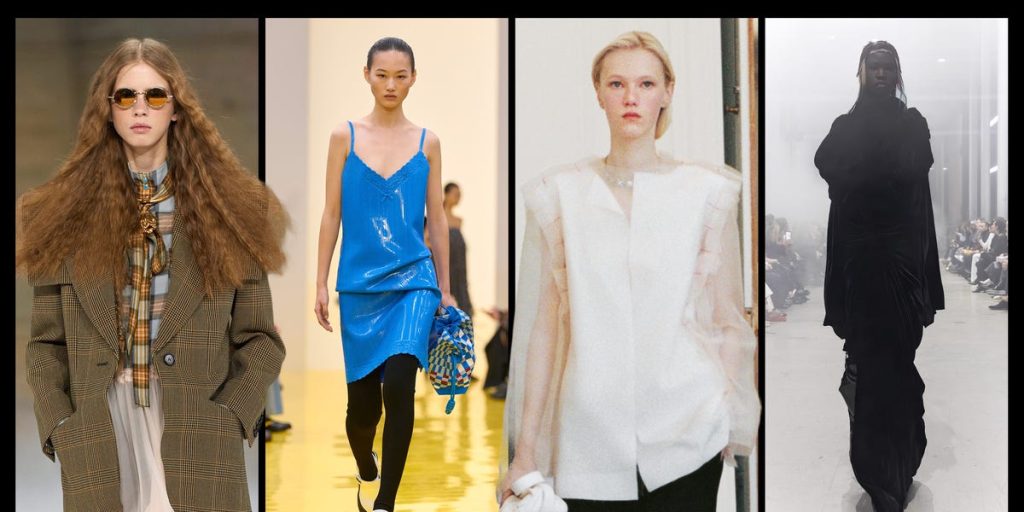
The luxury fashion landscape has witnessed a fascinating evolution where artistic vision increasingly challenges traditional commercial boundaries, and nowhere is this more evident than in recent Paris Fashion Week presentations.
Mary-Kate and Ashley Olsen have transformed their brand into a symbol of meticulous attention to detail, where even the presentation refreshments have gained legendary status among fashion insiders. Their carefully curated offerings of individually presented berries and premium chocolates reflect their broader design philosophy: an unwavering commitment to sensory experience and emotional connection through clothing.
Their latest winter presentation explored the concept of incompleteness as beauty. The collection featured garments deliberately left in various stages of construction, with price tags intentionally visible on embellished evening wear and silk pieces designed to appear unfinished. Loose threads danced as models moved down the runway, while a stunning blue embroidered dress was wrapped around the body like a luxurious towel, celebrating the raw-edged aesthetic.
During subsequent viewings, the brand’s highly coveted handbags appeared intentionally distressed and pre-weathered, perhaps nodding to the designers’ own history of carrying well-worn luxury accessories. The collection emphasized tactile luxury through velvet coats lined with mink, butter-soft leather footwear, and hidden pearl strands beneath nude turtlenecks, creating an intimate relationship between wearer and garment.
In contrast, Chemena Kamali’s vision for Chloé looked beyond individual experience toward collective human connection. Her ‘Devotion’ collection examined how clothing can serve as vessels for emotion and memory in an increasingly mechanized world. Drawing from the brand’s heritage of romantic, liberated silhouettes pioneered by founder Gaby Aghion in the 1950s, Kamali pushed this legacy further into contemporary relevance.
Folk traditions heavily influenced the presentation, featuring hand-knitted cardigans reminiscent of treasured family heirlooms, complete with coordinating headwear. Flowing mousseline dresses in vibrant red, checked green, and prairie tones evoked vintage shop discoveries while maintaining modern edge through thigh-high cowboy boots with exposed shearling details. Kamali positioned fashion as a tool for connection rather than escapism, offering unity in divisive times.
Rick Owens presented his ‘Tower’ collection at Palais de Tokyo, elevating clothing beyond mere necessity into protective armor for modern life. Opening looks featured tower-like sheaths crafted from glossy bull leather, boiled wool, and Kevlar—a material five times stronger than steel typically reserved for body armor. Subsequent pieces enveloped wearers in silk-cashmere cocoons and oversized goat-hair coats that seemed to consume their inhabitants.
Flight jackets and miniature tower mantles appeared in thick felt, handcrafted in specialized ateliers in Bikaner, Rajasthan, paired with the designer’s signature platform boots. Owens drew inspiration from Marlene Dietrich, particularly her humanitarian spirit and moral strength alongside her iconic status, seeking to blend responsibility with artifice.
Meanwhile, Jack McCollough and Lazaro Hernandez championed levity as revolutionary force. Building upon their debut collection’s foundation of bold primary colors and high-fashion sportswear fusion, they embraced humor as a vehicle for serious commentary. Their audience sat among life-sized animal sculptures while witnessing pointelle slips reimagined in latex, triple-hooded bomber jackets in tangerine with gingham and fur accents, and wrap-around shag mini dresses in rich brown and purple tones.
The designers incorporated functional whimsy through inflatable pockets and collars on puffer jackets, complete with the requisite air pump accessory. While perhaps frivolous, their approach celebrates joy as an essential element of fashion expression, proving that commercial success and artistic integrity need not be mutually exclusive.