Oil Price Surge Threatens to Neutralize Tax Cut Benefits
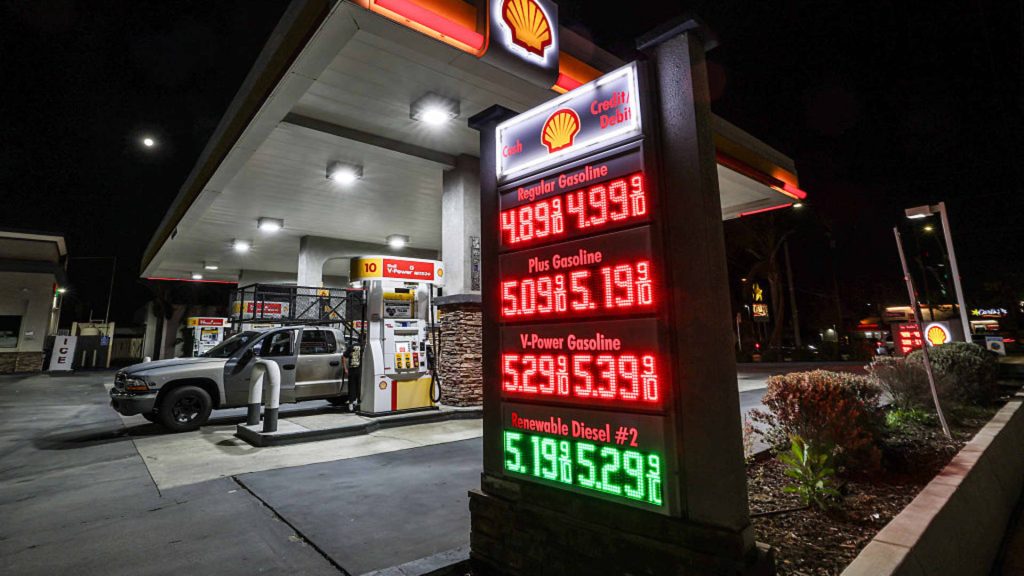
Escalating crude oil prices pose a significant threat to the economic benefits promised by recent tax legislation, potentially negating the financial relief intended for American consumers.
Financial analysts warn that sustained oil price increases of $20 or more per barrel could completely offset the economic advantages of individual tax reductions, effectively canceling out both reduced tax withholdings and enhanced refund amounts.
Raymond James strategist Tavis McCourt highlighted this concern, noting that the recent $25 price surge essentially eliminates the fiscal advantages of the tax legislation if oil remains at current levels.
McCourt’s assessment examines the impact of oil price fluctuations on the $420 billion Americans spent on gasoline during the final quarter of 2025. His calculations factor in potential demand reduction due to higher prices and companies’ margin adjustments, leading to projections that a $20 oil price increase could force consumers to spend an additional $150 billion at gas stations.
The Tax Foundation estimates individual tax cuts at $129 billion for 2025, with most benefits expected to materialize through tax refunds during the current filing season.
Oil prices have experienced dramatic volatility, climbing from $67.02 per barrel before recent international conflicts to $88.20 as of Tuesday morning, representing an increase exceeding $20 per barrel despite Monday’s market turbulence.
Wolfe Research chief economist Stephanie Roth corroborates these projections, estimating similar consumer impacts from elevated oil prices. However, she emphasizes that crude prices would need to remain above $100 per barrel for extended periods to fully materialize these effects.
Historical precedent suggests oil price normalization takes considerable time following geopolitical events. Analysis of previous conflicts, including the 1990 Gulf War and the 2022 Russian invasion of Ukraine, indicates approximately six months for oil prices to return to pre-conflict levels.
The timing proves particularly challenging as consumers prepare to receive tax refunds. Citadel Securities estimates only 30% of refunds were distributed by March 1, with distribution expected to reach 75% by May 1, coinciding with the current oil price shock.
Gabriel Shahin, CEO of Falcon Wealth Planning, explains that higher energy costs are redirecting money that would have otherwise boosted consumer spending, effectively nullifying the anticipated economic stimulus from tax refunds.
However, Dan Niles from Niles Investment Management offers a different perspective, suggesting tax refunds could help the economy withstand higher oil prices. He points to similar price levels in 2022 and 2023 when the economy avoided recession despite widespread predictions of economic downturn due to rising interest rates.
Economists caution against drawing direct parallels to previous oil price surges, noting significant differences in current economic conditions. Core inflation currently runs at 3% compared to 5.5% during previous crises, while job growth has slowed dramatically from 500,000 monthly additions to 37,000 in recent months.
Market analysts believe that if tax legislation stimulus proves weaker than anticipated, it may not significantly alter annual economic outlooks, particularly for equity markets that never fully priced in substantial consumer spending increases. Consumer discretionary stocks have underperformed the broader market in 2026.
Economic resilience may depend largely on labor market stability. Historical data shows sustained consumer spending declines typically occur only alongside substantial job losses, suggesting the economy could weather both elevated oil prices and reduced stimulus effects if employment remains strong.