Desert Discovery Reveals New Spinosaurus Species with Massive Head Crest
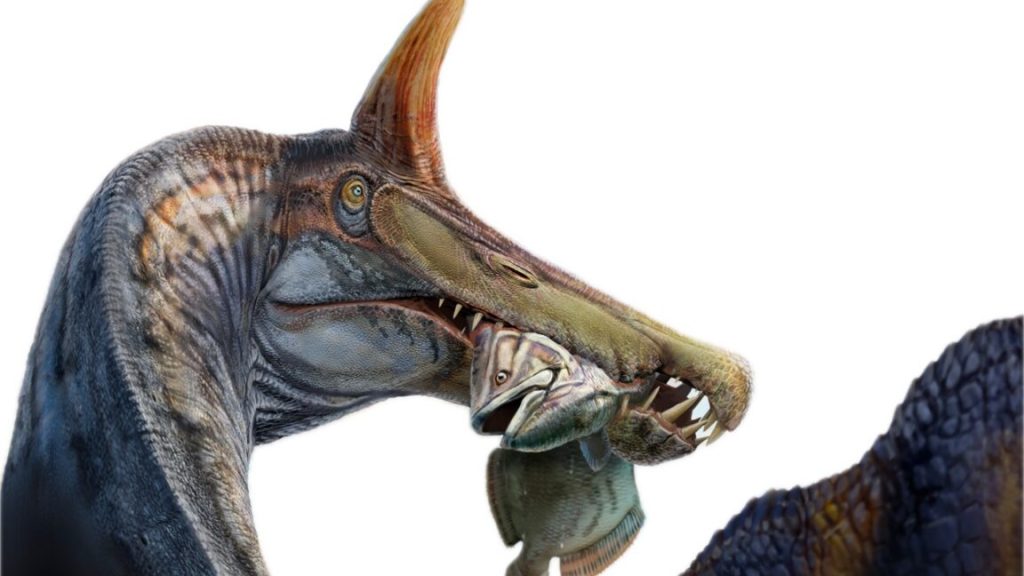
A groundbreaking paleontological discovery in Niger’s Sahara Desert has unveiled a previously unknown species of Spinosaurus that challenges existing theories about how these massive predators lived and hunted. The newly identified dinosaur, dubbed Spinosaurus mirabilis, possessed an extraordinary blade-like crest on its head and lived far from any ocean, suggesting these creatures were wading hunters rather than deep-sea divers.
Revolutionary Find in Remote Desert
University of Chicago paleontologist Paul C. Sereno led an extensive expedition deep into the central Sahara, where his team discovered multiple specimens of this new Spinosaurus species. The fossils were unearthed at a site called Jenguebi, a location that required more than a day’s journey through desert terrain with nearly 100 team members, including armed guards and local Tuareg guides.
The discovery site represents what was once an inland river basin during the Cenomanian period of the Late Cretaceous, approximately 95 million years ago. Crucially, this ancient habitat was located 500 to 1,000 kilometers from the nearest marine coastline, contradicting previous assumptions that Spinosaurus species were primarily marine predators.
Anatomy Suggests Wading, Not Diving
The skeletal remains found alongside massive long-necked sauropod dinosaurs indicate that S. mirabilis thrived in freshwater river environments rather than oceanic settings. This terrestrial discovery fundamentally challenges the popular depiction of Spinosaurus as an aquatic diving predator, similar to modern marine mammals.
Sereno’s analysis reveals that the dinosaur’s anatomy was poorly suited for diving. The creature possessed air-filled bones similar to modern birds, which would have made it naturally buoyant. Unlike diving birds such as penguins, which have evolved to eliminate these air sacs, Spinosaurus retained them, making underwater pursuit hunting virtually impossible.
Instead, the evidence points to a lifestyle resembling that of modern wading birds like herons or cranes. The dinosaur likely stood in shallow waters, using its elongated snout to snatch fish and other aquatic prey in ambush-style attacks.
The Magnificent Scimitar Crest
What truly sets S. mirabilis apart from other Spinosaurus species is its remarkable head ornament. The dinosaur possessed a massive, curved crest that arched backward from its snout, reaching its highest point above the eyes. This scimitar-shaped structure was composed of solid bone marked with distinctive grooves and striations.
In life, this bony foundation would have been covered by a keratinous sheath, potentially extending the crest’s total length to over half a meter in fully grown adults. Researchers believe this elaborate display structure served primarily for visual communication, allowing individuals to signal their size, maturity, and fitness to potential mates and rivals without engaging in dangerous physical confrontations.
Specialized Predatory Adaptations
Beyond its striking crest, S. mirabilis exhibited sophisticated hunting adaptations. Its elongated skull featured a low profile with a distinctive mushroom-shaped expansion at the tip. The jaw structure allowed upper and lower teeth to interlock perfectly, with strategic gaps in the upper tooth row accommodating larger lower teeth.
This dental arrangement closely resembles that of modern long-snouted crocodiles, optimized for rapid, trap-like closure when capturing aquatic prey. Despite weighing over seven tons, the dinosaur was built for precision fishing rather than brute force predation.
Climate Change and Extinction
The research suggests that Spinosaurus species flourished during the Early Cretaceous period, diversifying across the margins of the ancient Tethys Sea. However, their highly specialized lifestyle ultimately contributed to their downfall. Around 95 million years ago, rising global sea levels created the Trans-Saharan seaway, flooding the shallow river systems and coastal swamps that supported these giant wading predators.
Unable to adapt to deeper aquatic environments due to their buoyant anatomy, the spinosaurid lineage faced extinction as their preferred habitats disappeared beneath rising waters. This specialization paradox demonstrates how evolutionary adaptations that provide advantages in stable environments can become liabilities during periods of rapid environmental change.
The discovery of S. mirabilis not only reshapes our understanding of Spinosaurus behavior but also highlights the importance of exploring remote fossil sites to uncover the full diversity of prehistoric life.